 11
11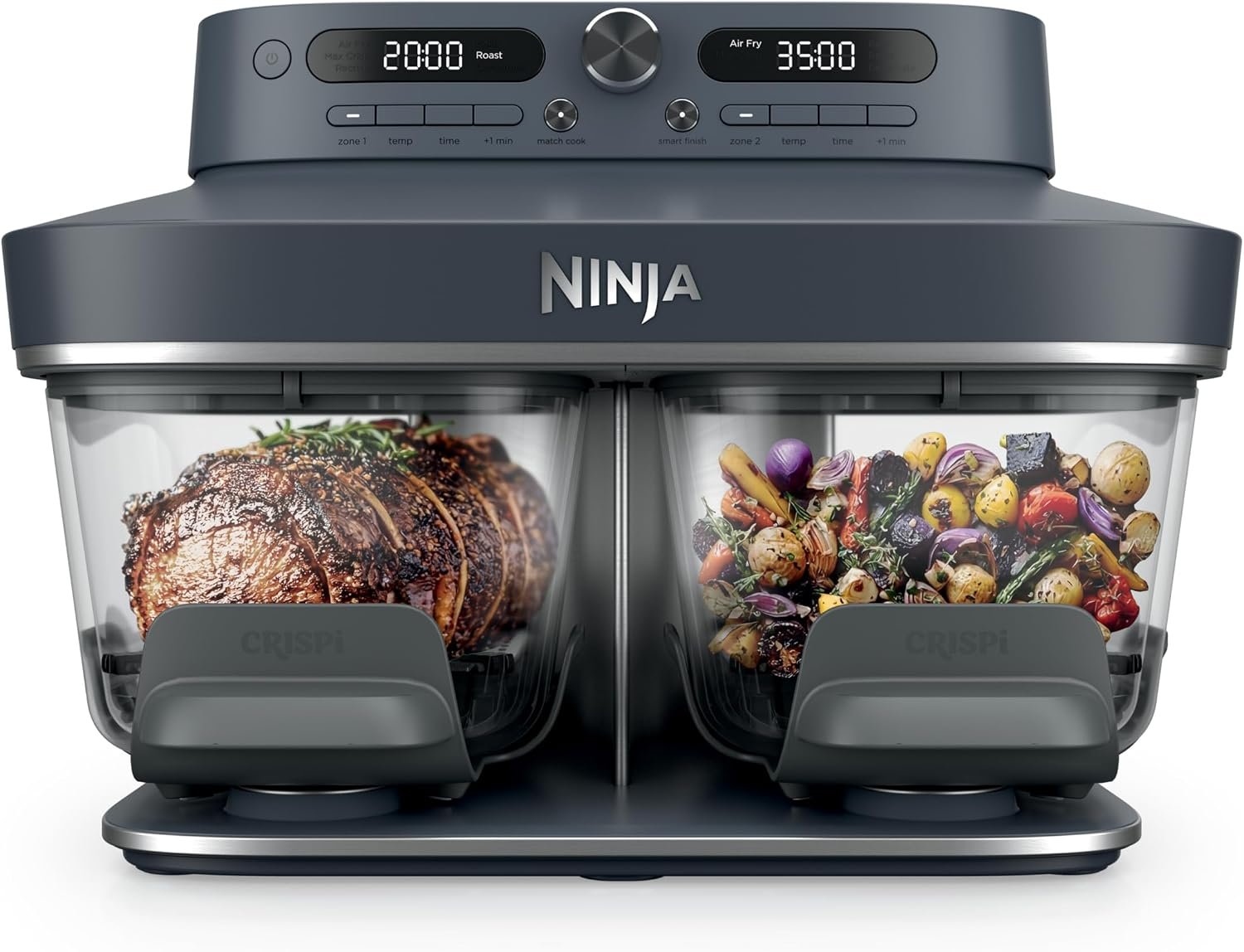
Countertop cooking appliances have changed a lot over the past several years, and air fryers in particular have moved from a niche gadget to something many households treat as an everyday kitchen tool. Among the many models available, the Ninja Crispi DualZone Glass Countertop Air Fryer (model DD101BL1, Cyberspace finish) stands out mainly because of one distinctive choice: glass cooking containers instead of the nonstick-coated metal baskets found in most air fryers on the market. This article takes a closer look at what this appliance offers, how it might fit into different kitchens, and what to think about before deciding whether it matches your cooking habits.
This is an informational overview meant to help you understand the product’s features and potential uses. It is not a personal review, and it does not include first-hand testing claims. Instead, the goal is to walk through what the specifications and design suggest about how the appliance functions, so you can make a more informed decision.
The Ninja Crispi DualZone is a countertop air fryer built around two separate 4-quart glass cooking containers, giving it a combined 8-quart capacity. Unlike traditional air fryers that rely on coated metal baskets, this model uses glass containers, which changes several practical aspects of how the appliance can be used and cleaned. It’s rated at 1785 watts and reaches a maximum temperature of 450°F, placing it within the higher-power range for countertop air fryers of this size.
The “DualZone” naming refers to Ninja’s approach of allowing two cooking zones to operate independently, or in tandem, depending on the cooking mode selected. This means it’s possible, in theory, to prepare two different foods at two different temperatures or cook times within the same unit, then have them finish simultaneously — a feature that has become fairly common across Ninja’s dual-basket lineup, but here it is paired specifically with glass containers rather than the brand’s more common nonstick baskets.
The most notable feature of this model is its use of two 4-quart glass containers rather than metal or nonstick-coated baskets. Glass containers are generally free of the nonstick coatings that some consumers prefer to avoid, and they tend to be dishwasher-safe without the same concerns about coating degradation over time that can come with traditional nonstick baskets. Glass also allows for a different kind of visual monitoring during cooking, since it doesn’t develop the same scratches or wear patterns that metal baskets can show with extended use.
It’s worth noting that glass containers can behave differently from metal ones in terms of heat retention and distribution, and they are generally heavier, which is a trade-off some users may want to factor in when considering ease of handling.
The appliance is designed to support six primary functions:
Having these six functions built into one countertop unit means it can potentially take on tasks that might otherwise require a toaster oven, a dehydrator, and a standard air fryer as separate appliances.
Because the unit has two separate 4-quart containers, it allows different foods to be prepared using different settings within the same overall cooking session. This kind of independent dual-zone functionality is useful when trying to prepare a full meal without staggering cooking times — for example, a protein might need a longer cook at a lower temperature, while vegetables might need a shorter, hotter session.
At 1785 watts, this unit sits toward the higher end of home countertop air fryer wattage, which generally supports faster preheating and more consistent high-heat performance. The 450°F maximum temperature is in line with what’s typically needed for functions like Max Crisp or Roast, where higher heat is used to achieve a browned, crisp exterior.
The unit is designed for countertop placement, with a “Cyberspace” finish that gives it a distinct look compared to the more common matte black or stainless finishes found on many kitchen appliances. Because it houses two 4-quart containers, it does require a reasonable amount of counter space and clearance for ventilation, which is generally the case with dual-zone air fryers regardless of brand.
An appliance like this tends to be more versatile than the phrase “air fryer” might initially suggest. Here are some practical ways it might be incorporated into regular cooking routines:
Weeknight meal prep with two components at once. Because the dual zones can run independently, it’s possible to cook a starch or vegetable side in one container while preparing a main protein in the other, potentially reducing the overall time spent getting dinner on the table.
Batch snack preparation. The dehydrate function opens the door to homemade dried fruit, vegetable chips, or jerky-style snacks, which can be a more cost-conscious and controlled alternative to store-bought versions, particularly for those interested in reducing added preservatives or sugars in snack foods.
Reheating leftovers without sogginess. The ReCrisp function is specifically aimed at solving a common complaint with microwaving leftovers — namely, that previously crispy foods (like fried chicken, pizza, or roasted potatoes) often turn soft or rubbery when reheated in a microwave. Reheating in this unit may help restore some of that original texture.
Small-batch baking. For households that don’t always want to heat up a full-sized oven for a small batch of cookies or a single-layer cake, the bake function offers a more energy-conscious alternative for smaller portions.
Roasting vegetables or proteins. The roast setting, combined with the higher wattage, may be useful for preparing roasted vegetables, chicken pieces, or similar dishes that benefit from steady, even heat exposure.
Cooking for varying dietary preferences within one household. Because the two zones operate independently, one person’s meal (say, a vegetarian dish) can be prepared alongside another person’s meal (perhaps involving meat) without cross-contact between the two, which may appeal to households managing different dietary needs or preferences.
This type of appliance tends to appeal to a fairly broad range of users, though certain groups may find it especially relevant:
Households looking to reduce nonstick coating in the kitchen. Because the containers are glass rather than coated metal, this may appeal to those who have been specifically seeking air fryer options without traditional nonstick coatings.
Families or multi-person households. The dual-zone, 8-quart total capacity is generally more suited to preparing food for multiple people at once compared to smaller single-basket air fryers, which are often better suited to individuals or couples.
People who cook a variety of dishes regularly. With six functions in one unit, this may be a good fit for those who want a versatile countertop appliance rather than a single-purpose one, especially in kitchens where counter space or storage space is limited.
Those interested in dehydrating foods. Not all air fryers include a dedicated dehydrate function, so for anyone specifically interested in making dried snacks at home, this could be a relevant consideration.
People who reheat leftovers frequently. The ReCrisp function may be particularly useful for those who regularly bring home restaurant leftovers or meal-prep in bulk and want a way to reheat food without losing texture.
On the other hand, this may be less necessary for individuals who cook primarily for themselves, have very limited kitchen storage space, or who already own multiple specialized appliances (a dehydrator, toaster oven, and air fryer, for instance) and aren’t looking to consolidate.
Before deciding on any kitchen appliance, it helps to weigh a few practical factors:
Counter space and storage. An 8-quart dual-zone appliance is larger than a single-basket air fryer. It’s worth measuring available counter space, and considering whether it will be a permanent countertop fixture or something that needs to be stored away between uses, in which case cabinet or pantry space should be factored in as well.
Weight of glass containers. Glass is generally heavier than the nonstick-coated metal baskets found in many competing air fryers. This can affect how easy the containers are to lift out, especially when full of food, and it’s a reasonable point of comparison for anyone with mobility considerations or who simply prefers lighter cookware.
Learning curve with multiple functions. With six different cooking functions, there may be a bit of a learning curve in understanding which setting is best suited to a given food or recipe. Many users find that referring to the included instructions or manufacturer guidance during the first few uses helps establish a baseline for future cooking.
Cleaning routine. While glass containers are often dishwasher-safe, it’s worth checking manufacturer guidance on cleaning to ensure longevity, particularly regarding the heating element and any electrical components that shouldn’t be submerged in water.
Power draw. At 1785 watts, this appliance draws a meaningful amount of electricity, which is typical for higher-heat cooking appliances but worth being aware of if operating on a circuit shared with other high-draw kitchen appliances.
Noise level during operation. As with most air fryers, the internal fan generates some operational noise. This is generally comparable to other air fryers in its class, though individual sensitivity to appliance noise varies.
Rather than comparing this specific product to individual competing models, it may be more useful to look at the broader categories of air fryers available on the market, to understand where a dual-zone glass model like this one fits in.
Single-basket air fryers are typically more compact and often more budget-friendly. They work well for individuals or smaller households and are generally easier to store due to their smaller footprint. However, they don’t offer the ability to cook two different foods simultaneously at different settings, which is where dual-zone models offer an advantage for larger households or more complex meals.
Dual-zone air fryers with nonstick baskets offer many of the same independent-cooking benefits as this glass model but use traditional nonstick-coated metal baskets. These tend to be lighter in weight and, in some cases, less expensive, but they carry the typical considerations associated with nonstick coatings, such as coating wear over time and manufacturer guidance around avoiding metal utensils.
Glass or ceramic-container air fryers, like the Crispi DualZone, represent a smaller but growing category. These appliances are often chosen by people specifically looking to avoid nonstick coatings altogether, and glass allows for visual monitoring of food during cooking. The trade-off tends to be in weight and, in some cases, the need for more careful handling to avoid dropping or chipping the glass container.
Air fryer/toaster oven combination units are a separate category altogether, often larger and designed to sit on the counter permanently, combining air frying with full oven-style functions like broiling. These tend to have larger capacities but require significantly more counter space than basket-style or dual-zone glass models.
Each of these categories serves different needs, and the right choice often comes down to available kitchen space, cooking habits, and any specific material preferences, such as avoiding nonstick coatings.
Does this air fryer require oil to cook food? Air fryers generally use hot air circulation to cook food, and many recipes require little to no added oil, though a light coating of oil is often recommended for achieving a more evenly browned, crisp texture, particularly with the Air Fry or Max Crisp functions.
Can the two zones be used independently at different temperatures? Yes, the dual-zone design is intended to allow each of the two 4-quart containers to operate with its own temperature and time settings, which is part of what differentiates this model from single-basket air fryers.
Are the glass containers oven-safe or freezer-safe? Specific temperature and usage limitations for the glass containers should be confirmed through the manufacturer’s official product documentation, as glass cookware often has specific guidance around thermal shock and safe temperature ranges.
How is the dehydrate function different from the air fry function? Dehydrating typically uses a much lower temperature over a longer period of time, aimed at removing moisture from food gradually without cooking it, whereas air frying uses higher heat over a shorter period to achieve a crisp, cooked result.
Is this appliance dishwasher-safe? Many glass air fryer containers are dishwasher-safe, but it’s worth confirming specific care instructions through the official product manual, since components like heating elements or lids with electronic parts typically should not be submerged in water.
How much counter space does this appliance need? Given its 8-quart total capacity split across two 4-quart containers, this unit will generally require more counter space than a compact single-basket air fryer. Checking the specific dimensions against your available counter or storage space before purchasing is recommended.
What does the ReCrisp function do? ReCrisp is designed specifically for reheating previously cooked or leftover food, aiming to restore some of the crispness that can be lost when reheating in a microwave.
The Ninja Crispi DualZone Glass Countertop Air Fryer represents a notable shift within the air fryer category, primarily due to its use of glass cooking containers rather than the nonstick-coated metal baskets found in most competing models. Combined with six distinct cooking functions and a dual-zone design that allows for independent cooking in each container, it’s built to serve as a fairly versatile countertop appliance for households looking to consolidate several cooking tools into one unit.
Like any kitchen appliance, its suitability really depends on individual circumstances — available counter space, cooking habits, household size, and personal preferences around cookware materials all play a role in determining whether this particular model aligns with your needs. Taking the time to review the full specifications and manufacturer guidance can help clarify whether its feature set matches what you’re looking for in a countertop cooking appliance.